Why Choose Us? 

Having a child with a heart condition can bring a lot of unknowns, including what type of treatment they may need. With modern advances in care, many children who have congenital heart conditions can be treated without open-heart surgery using a minimally invasive procedure called cardiac catheterization.

The interventional cardiology team at the Patel Children’s Heart Institute is a regional leader in this approach, and is a source of compassion and support for families. Located within BayCare St. Joseph’s Children’s Hospital, our congenital heart program is among the busiest in the region. Every day, we help children live more full, active lives.

Our interventional cardiologists are at the forefront of innovation, pioneering new technologies and training doctors from other hospitals in their use. We're often among the first in the region to adopt the latest devices and techniques. Through active participation in clinical trials, your child may also have access to promising new treatments before they become widely available.


What Is Cardiac Catheterization?

Cardiac catheterization is a minimally invasive procedure for diagnosing and treating certain heart conditions. During the procedure, a fellowship-trained pediatric interventional cardiologist inserts a thin, flexible tube (catheter) into a blood vessel, usually in the groin or neck, and carefully guides it to your child's heart.

Once the catheter is in place, the care team can take detailed images and measurements to check heart function. This information allows us to make an accurate diagnosis and determine the most appropriate treatment. In many cases, we can perform treatment during the same procedure.

Because cardiac catheterization is less invasive than open-heart surgery, it's often associated with:

  • Faster recovery and a quicker return to school and daily activities
  • Fewer risks and complications
  • Less discomfort
  • Shorter hospital stays

Cardiac Catheterization Procedures

Newborn babies being cared for by healthcare professionals .

We use cardiac catheterization to treat congenital heart conditions in children of all ages, including procedures to: 

  • Close holes in the heart (such as atrial septal defects, ventricular septal defects and patent ductus arteriosus)
  • Open narrowed heart valves and blood vessels (including pulmonary valve stenosis, aortic valve stenosis, pulmonary artery stenosis and coarctation of the aorta) 
  • Replace pulmonary and tricuspid valves 

Modern Cardiac Catheterization Lab

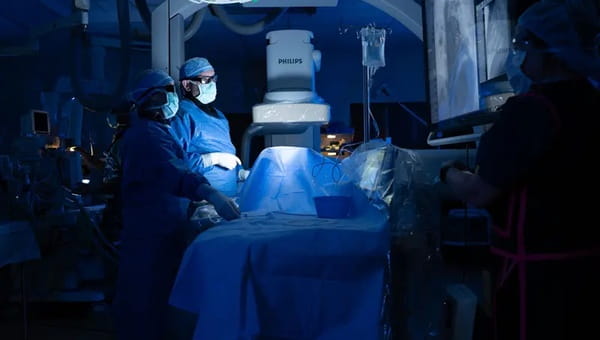
An image of two providers in the pediatric cardiac catheterization lab.

BayCare St. Joseph’s Children’s Hospital features a state-of-the-art pediatric cardiac catheterization lab. This unique space combines a fully equipped operating room with advanced catheterization technology specifically designed for children. It also includes high-resolution imaging that helps guide instruments with precision. When needed, our team can perform advanced hybrid procedures using both surgery and catheter-based treatment in the same setting.


What to Expect

We bring together a group of experts around your child, including pediatric interventional cardiologists, anesthesiologists, advanced practice providers and nurses. The team specializes in congenital heart conditions and understands the stress families feel. At every step of care, they're by your side to help you feel comfortable and supported.

Our interventional cardiologists work with pediatric cardiologists, fetal cardiologists, heart surgeons and intensive care doctors to coordinate your child’s complete care. We help develop a treatment plan that'll be most effective now and in the future.


Innovations in Pediatric Interventional Cardiology

When it comes to introducing innovative devices, our interventional cardiology program has led the way in West Central Florida and beyond. Through our successful adoption of new technologies, we’ve been able to expand minimally invasive options to thousands of children.

Our groundbreaking achievements include being the first to implant:

A group of people wearing scrubs standing together in an operating room.
  • A new cardiac stent designed for infants: When a baby is born with narrowed pulmonary arteries (pulmonary stenosis), their heart must work harder and can become damaged. Treating this condition involves inserting a hollow tube called a stent to open the blood vessel. We were the first in the southeastern U.S. to use the Minima stent, a device developed to fit infant blood vessels.
  • A new device for atrial septal defect (ASD): An ASD is a hole in the wall between the two upper chambers of the heart. Untreated, ASDs can lead to serious heart conditions and an increased risk of stroke in adulthood. Using cardiac catheterization, we were the first in Florida to implant the Gore Cardioform Septal Occluder to permanently repair an ASD.
  • A new transcatheter pulmonary valve: Children born with blocked or leaky heart valves often undergo multiple open-heart surgeries before reaching adulthood. Transcatheter pulmonary valve replacement (TPVR) offers a nonsurgical option to replace the pulmonary valve. We were the first in Tampa Bay to use the Melody valve to perform TPVR. More recently, we were the first in Florida to use the Harmony valve, an updated version that broadens treatment options. 

Our Providers

A pediatric patient being examined with their caretaker nearby
Your child is cared for by pediatric interventional cardiologists who are fellowship trained in pediatric and congenital interventional cardiology and board certified in pediatric cardiology. Beyond their advanced expertise, you’ll find they have a warm, reassuring approach that gives you confidence you’re in the right place.

Additional Resources

What Is Cardiac Catheterization?
Dr. Jeremy Ringewald, director of cardiac catheterization at BayCare St. Joseph’s Children’s Hospital, explains interventional cardiology and how cardiac catheterization works.
BayCare St. Joseph’s Children’s Hospital Pediatric Cardiac Catheterization Lab: State-of-the-Art Technology
Dr. Jeremy Ringewald talks about the advanced technology and devices that our physicians use in the pediatric cardiac catheterization lab.

Contact Us

For more information about our pediatric heart services or to make an appointment with one of our specialists, call the Kids Heart Hotline at (813) 644-6679 or complete the form to connect with a nurse navigator.

Have Questions? Contact a Nurse Navigator