About Ventricular Assist Device (VAD)

A ventricular assist device, or VAD, can help people with advanced heart failure. BayCare offers a skilled multidisciplinary team to help you integrate a VAD into your lifestyle.

In the most common type of heart failure, the left ventricle which is the main pumping chamber of the heart, is unable to adequately pump enough blood to the body. This means that enough blood is not being delivered to the body. People with this condition can face health risks similar to those seen in common cancers. Because this illness is so serious, some people need extra help to keep their heart working well. An advanced heart failure cardiologist may recommend an LVAD if lifestyle changes, heart failure medications and other procedures don't work.

A diagram showing the parts of ventricular assist devices, including the outflow conduit, battery pack, pump, the back up battery pack, and the percutaneous lead.

An LVAD is a surgically implanted device that helps the heart's left ventricle pump blood to the rest of the body. If you can't have a heart transplant, an LVAD may be used as a lifelong heart failure treatment.

Untreated heart failure can damage organs in your body and make you very sick. The sooner it's treated, the better the possible outcome. If you might benefit from having an LVAD, BayCare can help you.

We'll discuss what you want and expect from LVAD treatment. A coordinated team of advanced heart failure cardiologists, heart surgeons, nurses, therapists and coordinators is at your side for as long as you need us.

 In addition to implanting the device, we can help you:

  • Connect with other patients who have had the LVAD procedure
  • Educate your family and caregivers
  • Prepare mentally for surgery and lifestyle changes

What to Expect From an LVAD Procedure

Implanting an LVAD requires open-heart surgery. At BayCare, we perform LVAD surgery at our nationally ranked St. Joseph's Hospital Heart and Vascular Institute in Tampa. Your advanced heart failure team will explain the benefits and risks of an LVAD and surgery to ensure you're prepared. It's essential that you understand how to live with and care for your device.

  • Before an LVAD Procedure
  • During an LVAD Procedure
  • After an LVAD Procedure

To find out if an LVAD is right for you, you'll undergo a comprehensive evaluation, including diagnostic tests and a psychosocial assessment. If you have advanced heart failure, you may need to stay in the hospital for a few days before the procedure. Your BayCare team will check your heart, liver, lung and kidney function and make sure you don't have any infections or blood clots before surgery.

On the day of the procedure, you'll receive general anesthesia so that you'll be asleep throughout the surgery. You'll be connected to a ventilator to help you breathe. You may also be connected to a heart-lung bypass machine during surgery.

LVAD surgery takes four hours or more. First, your BayCare heart surgeon makes an incision down your chest. They open your breastbone to access your heart and place the LVAD in the left ventricle. A flexible plastic tube runs from the device to the aorta, which sends blood to the rest of the body. A wire called a driveline attaches to the LVAD and exits the body through an opening in the skin on your abdomen. The driveline connects to an external controller and battery. You'll carry these items with you at all times in a bag, vest or pocket.

You'll likely stay in the hospital for a few weeks, including several days in the intensive care unit immediately after your procedure.

You'll have staples and bandages around the driveline site. We'll show you how to care for the opening and keep it covered. You won't be able to swim or take baths with an LVAD, but you can use a special bag to keep the device dry when you shower.

After you leave the hospital, you'll have routine checkups with your care team. Six to eight weeks after your surgery, you'll participate in a cardiac rehabilitation program for two to three months.

While an LVAD can help you manage heart failure, living with one means some lifestyle changes to consider:

  • You'll have equipment both inside and outside your body.
  • You may need to take blood-thinning medications.
  • You'll need to care for the opening in the skin of your upper abdomen where the driveline exits.
A nurse holds hands with a patient in a wheelchair.

 Your LVAD Coordinator

Your BayCare LVAD coordinator is your ally. They'll help you learn how to:

  • Check for signs of infection or other complications
  • Keep the skin around the driveline clean
  • Keep the device clean, dry and charged
  • Understand what alarms mean and how to respond if an alarm goes off
  • Take and manage medications
  • Maximize your health with diet and healthy habits

Benefits of an LVAD Procedure

Thanks to technological advances in LVADs over the years, the procedure has become the standard of care for certain people who have advanced heart failure. After getting an LVAD, most patients feel better than before. A heart that pumps more efficiently improves blood circulation to the lungs, brain and other organs. You can breathe more easily, think more clearly and have more energy. The device improves your quality of life, enabling you to participate in routine daily and leisure activities you couldn't do before.

Heart failure is serious and worsens over time. LVADs don’t have to be a last resort. Getting help early for heart failure improves your chances for great results. At BayCare, you get coordinated care from the Advanced Heart Failure team, including board-certified doctors and surgeons. In 2026, we received a five-star rating from Healthgrades for the treatment of heart failure.

Wherever you are in your heart health journey, we work with you to understand what matters most to you. We use our expertise and skill to help you live your life your way.


Our Location

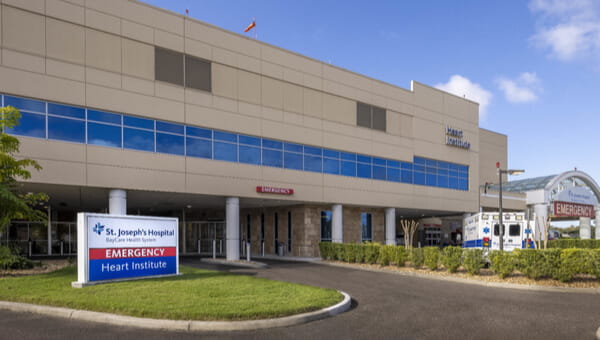
entrance to the Saint Josephs Hospital Heart Institute

BayCare’s LVAD program is located at St. Joseph’s Hospital Heart and Vascular Institute in Tampa. Our heart surgeons are all board certified and members of the Society of Thoracic Surgeons (STS). The STS is the leading organization dedicated to ensuring the best possible outcomes for cardiothoracic surgery, including LVAD. BayCare heart and vascular surgery programs achieved the highest 3-star ratings from the STS in 2025, placing BayCare in the top 12% of programs in the nation. Having launched our LVAD program in 2017, BayCare's surgeons are among the most experienced in West Central Florida.

Request a Referral

For a referral to a cardiovascular or cardiothoracic surgeon, call (855) 233-0888, or complete the form to request a referral.

Request a Heart and Vascular Specialist Near You

After you complete the form, our team will send you a list of heart and vascular specialists.