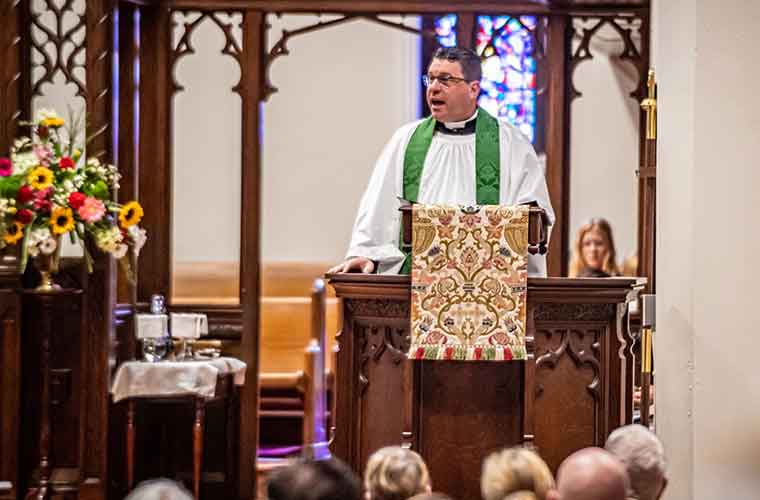
When he turned 45, the Rev. Christian Wood decided to take better care of his health. In addition to his annual physical, Rev. Wood had a colonoscopy.
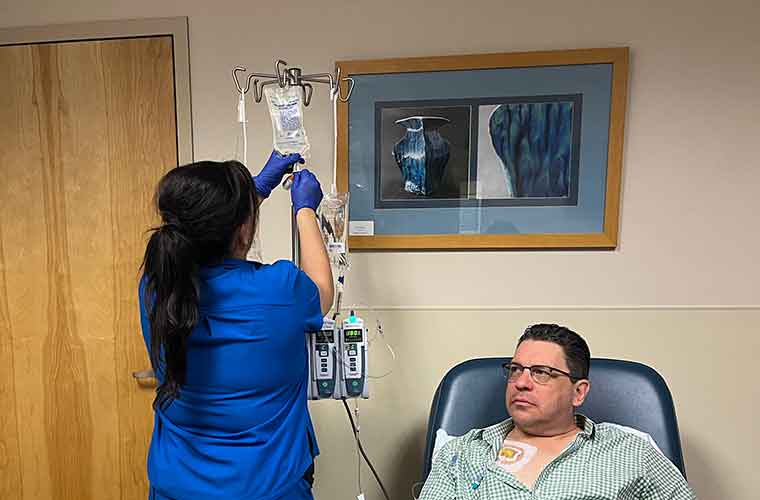
The busy priest, who leads the congregation at St. John’s Episcopal Church in Tampa’s Hyde Park, thought the screening would be routine. However, of the eight polyps found during the procedure, one was cancerous. Following surgery on Jan. 13 at St. Joseph's Hospital, Rev. Wood is now undergoing chemotherapy at St. Joseph's Hospital-North.
“People should get tested as soon as they can,” Rev. Wood said. “I would rather have 150 colonoscopies than have one round of chemotherapy. And I think they need to back up (the age for) testing. I think if I had had a colonoscopy at 40, I don’t think I would have had cancer.”
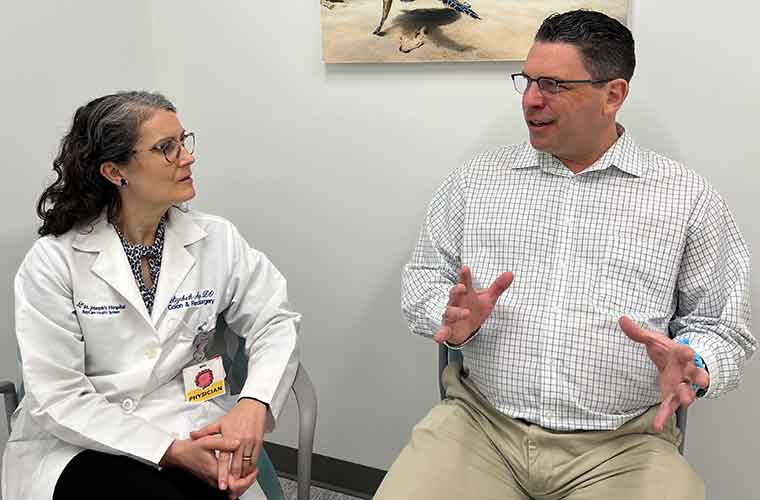
“Probably not,” said Elizabeth Myers, DO, a BayCare Medical Group colorectal surgeon at SJH. She was Rev. Wood’s surgeon. “At some time, we probably should lower the screening age to 40. We know those guidelines should continue to drop.”
The recommended age to begin receiving the screening was lowered from 50 to 45 by the American Cancer Society (ACS) in 2018. The U.S. Preventive Services Task Force followed suit in 2021. The ACS says that colorectal cancer is now the leading cause of cancer death in men under the age of 50 and the second behind breast cancer in women under 50.
March is Colorectal Cancer Awareness Month, a time to emphasize the importance of identifying risk early. Through its High Risk Cancer Program, BayCare offers a free cancer risk assessment for anyone in West Central Florida who wants to understand their cancer risk, regardless of age or medical history.
Recent public conversations involving actors Catherine O’Hara, 71, and James Van Der Beek, 48, have helped draw attention to colorectal cancers. They also reinforce the importance of accuracy. Rectal cancer and colon cancer are clinically distinct, and cancer is not always the direct cause of death. In some cases, it may be an underlying condition, while a complication such as a pulmonary embolism is the immediate cause.
Dr. Myers said she hopes those high-profile cases shine more light on the disease, especially for younger people.
“I think people fear the colonoscopy and if something is found. But it’s better to know, especially if it’s early. Colorectal surgeons now can remove cancers robotically which offers a quicker and less painful recovery,” Dr. Myers said. “And most patients will not require a colostomy (an opening in the large intestine), which is everyone’s fear.”
Dr. Myers, who has been a colorectal surgeon with BayCare for nearly 10 years, answered five questions about risk, diagnosis and treatment.
What are the common symptoms and early warning signs of colorectal cancer?
Dr. Myers: Many patients are asymptomatic when cancers are small and early, which is why routine and timely screening is so important. Common symptoms that can develop as the cancer grows are rectal bleeding, change in bowel habits with more constipation or diarrhea, or unintentional weight loss.
Who is at risk of developing colorectal cancer?
Dr. Myers: Everyone is! You do not have to have a genetic predisposition. In fact, most colorectal cancers are sporadic, which means they have no associated family history. Only 15% of people under 50 have a hereditary cause for their colorectal cancer.
How is colorectal cancer diagnosed and what are the most common diagnostic tests?
Dr. Myers: Colorectal cancer is most often found on a screening colonoscopy or diagnostic colonoscopy when symptoms present and require investigation.
What treatment options are available for colorectal cancer?
Dr. Myers: Some very early-stage colorectal cancers can be removed when they are still contained inside a polyp with polypectomy alone during a colonoscopy. When they have grown in size, they often require surgery to remove.
How can lifestyle choices influence the risk of colorectal cancer?
Dr. Myers: The top contributing factors to early-onset cancer, including colorectal cancers, are:
- Consuming a poor diet with ultra-processed foods such as sugary drinks, red/smoked meats
- Exposure to microplastics and other environmental toxins
- High alcohol consumption
- Smoking
- Sedentary behavior
Rev. Wood says he is grateful that the age recommendation is 45 because he had no symptoms. “There would have been no other reason for me to have a colonoscopy,” he said. “I can’t speak more highly of BayCare and St. Joseph’s Hospital. The nurses and the techs, they were the hands and feet of God for me.”
BayCare’s cancer survey assesses risks for nine different types of cancer and only takes five minutes to complete. Learn more: BayCare.org/KnowYourRisk