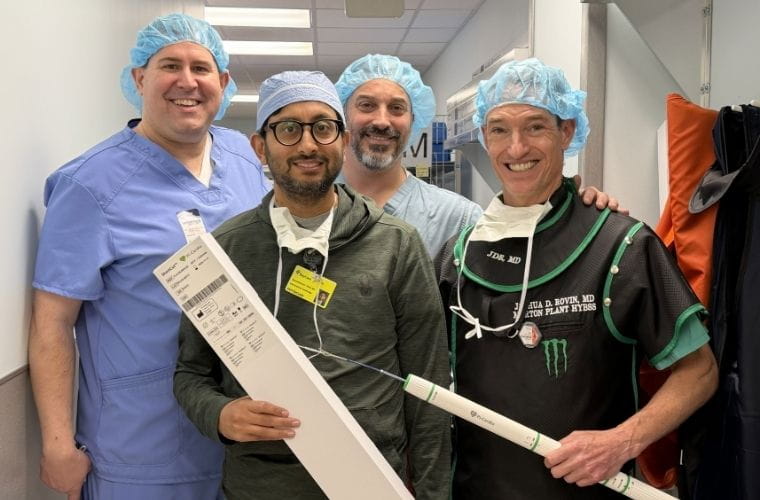
BayCare's Morton Plant Hospital in Clearwater is the first hospital in Florida to use a newly FDA-approved device that improves safety for patients undergoing a complex heart valve procedure known as valve-in-valve Transcatheter Aortic Valve Replacement (TAVR).
TAVR is a minimally invasive heart valve replacement surgery used to treat severe aortic stenosis, or narrowing of the aortic valve, which increases the workload and strain on the heart. Instead of opening the chest for surgery, doctors insert a catheter into an artery, usually in the groin area, and guide it into the heart, implanting a new aortic heart valve inside the original diseased valve.
As more patients outlive their original valve replacements, some require a second replacement. For certain high-risk patients, placing a new valve inside an old one can block blood flow to the heart. Until recently, treatment options were limited.
“As more and more patients return to us for valve replacements, this new device allows us to safely treat them here,” said BayCare Medical Group cardiovascular surgeon Joshua Rovin, MD, FACS. “We’re not only extending patients’ lives but also helping them get back to truly enjoying every moment.”
With its long-standing reputation of clinical excellence, Dr. Rovin and Morton Plant Hospital’s Center for Advanced Valve and Structural Heart Care team were invited to be one of the first to use this device, named ShortCut™. Deemed the world’s first dedicated leaflet modification device, it is mechanically designed to safely and precisely cut the sides or ‘leaflets’ of the worn-out valve before the new valve is implanted, helping protect blood flow and reduce complications.
Since founding the center in 2012 and serving as its medical director, Dr. Rovin and the dedicated multidisciplinary heart team have brought the latest minimally invasive treatments to the Tampa Bay area, transforming thousands of lives. Their commitment ensures local patients have access to the most advanced options for tackling aortic stenosis.
BayCare also has structural heart programs at St. Joseph’s Hospital in Tampa and Winter Haven Hospital in Winter Haven. In addition to aortic stenosis, the structural heart programs also treat pulmonary stenosis, mitral stenosis, aortic regurgitation and mitral regurgitation. Depending on the severity of disease and other factors, patient treatment options may include medical management, minimally invasive valve repair, minimally invasive valve replacement or open-heart surgery.
For more information: BayCare’s structural heart programs