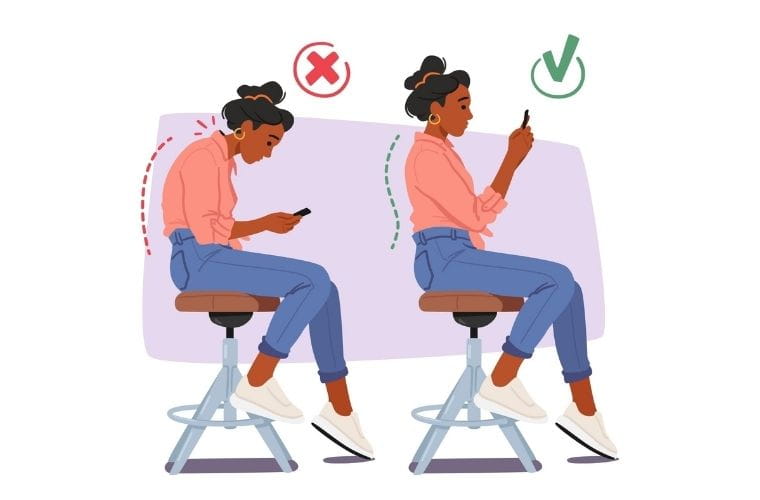
Posture is the way your body holds itself when sitting, standing or moving. It affects how forces travel through the spine and how hard muscles must work to support daily activity. When posture is balanced, movement feels easier. When it isn’t, strain can build over time.
“Posture plays a major role in how the spine functions throughout the day,” said Adam Befeler, MD, FAANS, FACS, a neurosurgeon with BayCare Medical Group and medical director of BayCare's Neuroscience Institute. “It influences balance, mobility and how efficiently the body moves during routine activities.”
Good posture helps keep the head, shoulders and hips aligned over the spine. This alignment allows muscles to share the workload instead of forcing certain areas, especially the neck and lower back, to overcompensate.
Why posture is more than standing up straight
Posture is not limited to how someone stands. It shows up while sitting at a desk, walking through a grocery store or bending to pick something up. Over time, small habits like slouching or leaning forward can add stress to muscles and joints.
“When posture is off, the body has to work harder just to stay upright,” Dr. Befeler said. “That extra effort can contribute to fatigue, discomfort and pain.”
Poor posture is commonly linked to neck pain and lower back pain. A muscle strain or spinal issue can cause someone to shift their posture to avoid discomfort, but that adjustment may create new problems by throwing the body out of balance.
How posture affects the spine over time
The spine has natural curves that help absorb shock and support movement. When posture changes, those curves can flatten or become exaggerated, increasing strain on muscles and connective tissue.
Leaning forward during everyday tasks like washing dishes or working on a computer places additional demand on the lower back muscles just to keep the body upright. Over time, that strain can make it harder to maintain balance and comfort.
“Posture problems often develop gradually,” Dr. Befeler said. “People may not notice the change until standing or moving becomes more tiring or painful.”
Fatigue while standing, difficulty walking long distances or visible changes in posture are common signs the body may be compensating for weakness, stiffness or an underlying spinal condition.
Sitting, standing and the role of movement
Many people focus on finding the right chair or workstation, but movement throughout the day plays a larger role in posture health.
“Changing positions regularly helps reduce stress on the spine,” Dr. Befeler said. “Prolonged sitting can place more pressure on spinal discs than standing.”
Breaking up long periods of sitting with standing, stretching or walking can help reduce stiffness and muscle fatigue. Simple adjustments such as raising a screen to eye level or alternating between sitting and standing can also improve alignment and reduce strain.
Why posture changes with age
A forward-leaning posture becomes more common with age. Muscle fatigue, joint stiffness and spinal arthritis can all make it harder to stay upright. Reduced sensation in the feet or concerns about balance may also cause people to look down while walking.
“These changes can make posture harder to maintain, but they are not something people should ignore,” Dr. Befeler said. “Addressing posture early can help preserve mobility, identify correctable problems earlier, reduce strain and support safer movement over time.”
Simple ways to support better posture
Improving posture often starts with understanding what is driving the change. In many cases, conservative approaches like physical therapy, strengthening exercises and mobility work can help restore balance.
Core-strengthening exercises that support the spine, along with gentle stretching, can make posture easier to maintain. Even small habits, like taking breaks from sitting or stretching before getting out of bed, can reduce stiffness and discomfort.
Staying aware makes a difference
Posture often slips because it becomes automatic. Awareness throughout the day can help interrupt habits that lead to strain.
“Many people do not realize they are slowly hunching forward,” Dr. Befeler said. “Simple cues like keeping the shoulders back and the head level can make movement feel easier and more balanced.”
With regular movement, strengthening exercises and attention to alignment, posture can become a quiet support system for the spine rather than a source of strain.
Expert Tips: Supporting Healthy Posture
- Change positions often and avoid sitting for long stretches
- Keep screens at or near eye level to reduce neck strain
- Strengthen core and back muscles to support the spine
- Stretch gently, especially after waking up or sitting for long periods
- Pay attention to posture during everyday tasks, not just when standing
For additional care, BayCare’s Neuroscience Institute addresses brain and spine health that influences posture, balance and everyday movement.
Learn simple ways to protect your health, spot warning signs early and discover tools that support well-being. BayCare’s Wellness Resources offer practical guidance to help you stay on track. Scroll to the bottom of the page to sign up for the Digital Digest newsletter and receive health tips, expert health guidance and BayCare updates.