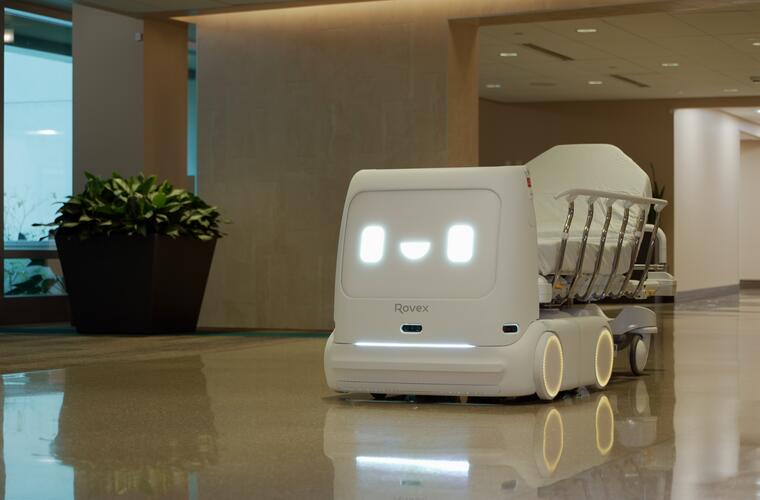
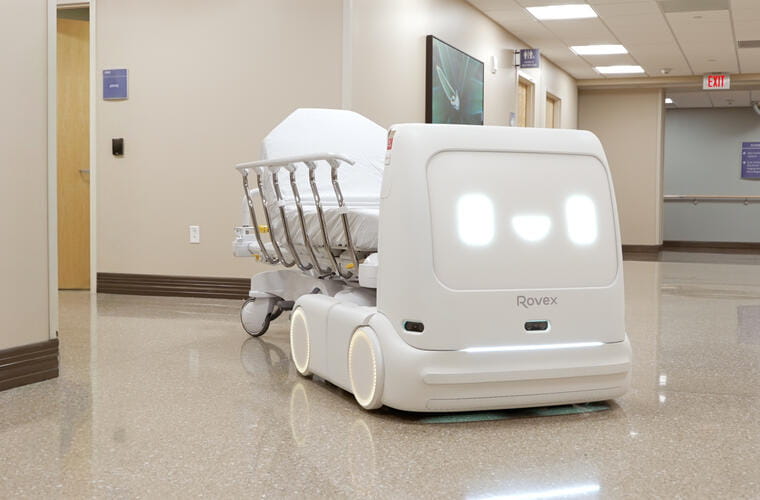
BayCare Health System, the largest not-for-profit academic health care system in West Central Florida, and Rovex, a Florida-based robotics startup, today announced a strategic partnership to pilot how robotics could support hospital operations and patient transport workflows. The pilot began at BayCare’s Morton Plant Hospital in Clearwater, Florida, this month.
“We are excited to join forces with Rovex to shape the future of hospital robotics and introduce this cutting‑edge innovation to BayCare, the health care industry and the communities we serve,” said Craig Anderson, BayCare’s vice president of Innovation.
The engagement will begin with a phased pilot at BayCare’s Morton Plant Hospital focused on evaluating workflows, transport patterns and operational opportunities within the hospital environment, with later phases designed to support potential in-hospital robotic stretcher movement. No patients will be transported by the robot during the current pilot.
“BayCare is an ideal partner because they understand that delivering better patient care requires innovation across every aspect of hospital operations,” said David Crabb, founder and chief executive officer of Rovex. “Hospital logistics has downstream effects on staff workload, patient flow and the patient experience. As an emergency physician, I saw firsthand how often providers are pulled away from direct patient care by operational tasks, and our goal at Rovex is to help return more of that time to patients.”
For BayCare, the Rovex pilot reflects a commitment to investing in the people who deliver care and the patients they serve. The technology is designed to support — not replace — team members by reducing physical strain and operational burden, helping care teams focus more fully on patients. Through this pilot, BayCare can thoughtfully evaluate how emerging technologies like robotics can complement existing workflows, support safe operations and strengthen a resilient workforce.
“What’s most compelling about this pilot is the chance to closely evaluate and learn,” said Dr. Chris Bucciarelli, BayCare’s vice president of ambulatory services and chief medical officer. “By carefully studying how robotics may support patient transport in a real hospital environment, we can generate insights that extend well beyond one facility. Those learnings have the potential to inform how health systems everywhere think about designing care environments that better support both patients and the people who care for them.”
“Health care has seen enormous investment in digital tools and AI, but hospitals still depend on a huge amount of physical work behind the scenes,” said Crabb. “We believe robotics can help offload some of that manual burden so staff and providers can spend more time focused on patients.”
Rovex believes robotics could eventually help hospitals improve throughput and make better use of existing capacity. As the population ages and health care workforce shortages continue to grow, hospitals will need practical new tools to meet rising demand while supporting healthcare workers.
For hospitals, patient transport is an essential part of care delivery. Delays in patient movement can ripple across the system, slowing imaging and procedural workflows, disrupting schedules, increasing strain and injury risk for staff, and creating a less efficient experience for both patients and care teams.