About BayCare Nursing Professional Governance

At BayCare, Nursing Professional Governance (NPG) gives nurses a voice in decisions that shape patient care, nursing practice and the work environment. Through system and hospital-based councils, nurses at every level can help influence clinical standards, quality outcomes and professional growth opportunities.

NPG supports BayCare's nursing professional practice model, philosophy and standards of care while aligning with the organization's mission, vision, values and strategic priorities. By encouraging collaboration between clinical nurses and nursing leaders, NPG helps strengthen accountability, shared decision-making and nursing excellence.

Participation in professional governance gives nurses opportunities to build leadership skills, take part in evidence-based practice and contribute ideas that improve patient outcomes, workforce engagement and the patient experience. By giving bedside nurses a voice, BayCare supports a culture of professional growth, continuous improvement and accountability.


Roles

Group of four female nurses walking and talking in hallway.

Clinical nurses lead councils, driving priorities and initiatives that directly impact patient care and nursing practice. Nurse leaders function as facilitators and strategic partners, supporting council work, removing barriers and ensuring alignment with organizational goals. This partnership promotes mutual respect, teamwork and ongoing improvement.


Goals and Outcomes

Council goals align with BayCare's nursing strategic plan and organizational priorities, supporting quality, safety, patient experience and workforce well-being. NPG councils help advance nursing practice through evidence-based practice, performance improvement and innovation.

Outcomes, progress and key initiatives from system and entity-based councils are regularly shared with executive nursing leadership to ensure transparency, alignment and organizational support. This governance structure reinforces BayCare's commitment to nursing excellence, professional development and the delivery of high-quality, patient-centered care.

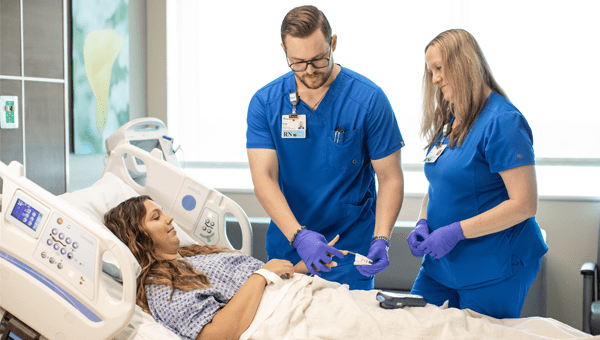
Male and female nurse treating female patient lying in bed.

BayCare Professional Nursing Models 

Professional Nurses. Driving Excellence. Advancing Care.

Guided by our values: Trust, Respect, Dignity, Responsibility and Excellence

BayCare Nursing Professional Practice Model

Our nursing professional practice model supports nurses in leading and delivering high-quality care in every setting.

Kristen Swanson – Theory of Caring Science1, 2: Focuses on building caring relationships between patients and nurses through knowing, being with, doing for and enabling.

Kristen Swanson – Five Caring Principles1, 2:
1. Know the person
2. Be with the person
3. Do for the person
4. Enable the person
5. Maintain belief

Patient-Centered Care Model: Our belief is that patients are at the center of every care decision and have a voice in their care.

Professional Governance Model: Nurses at every level have a voice in clinical and professional decision-making.

Organizational Values: Our shared values guide everything we do.

Interprofessional Relationships: Communication, teamwork and collaboration help us deliver high-quality care.

Professional Development and Practice Programs: Learning and professional growth support better patient outcomes and prepare our team for the future.

Diagram of BayCare’s nursing professional practice model, showing the connection between professional governance, interprofessional relationships, and professional development and practice with patients, families and team members in the center.
Diagram showing BayCare's nursing professional governance model, including system-level, hospital-based and site-based councils centered on patients, families and team members.

BayCare Professional Nursing Governance Model

Our professional nursing governance model empowers nurses to influence decisions that shape nursing practice and patient care. The model connects nurses through unit, hospital and system-level councils, creating opportunities for nurses closest to the work to identify opportunities, collaborate on solutions, use evidence and data to improve practice and evaluate outcomes. This interconnected structure strengthens nurses’ voices, professional accountability, collaboration and shared ownership of nursing practice across BayCare.


Councils, Collaboratives and Committees

  • System and Structural Councils

    BayCare Professional Practice Council (System Level)
    Provides system-wide leadership for nursing professional practice, advancing standards, recognition, clinical ladder development and other initiatives that support nursing excellence across BayCare.

    Hospital-Level Professional Practice Councils (PPC)
    Support the implementation of professional practice standards at the hospital level, promoting nurse engagement, recognition and alignment with BayCare's nursing strategic priorities.

    Unit-Based Councils (UBC)
    Empower frontline nurses to participate in decision-making related to clinical practice, quality improvement, professional development and evidence-based practice at the point of care.

  • Clinical Collaboratives

    Clinical collaboratives are interprofessional councils focused on specialty practice, consistent standards and patient outcomes. BayCare has the following collaboratives:

    Critical Care Collaborative
    Advances evidence-based practice and consistent care for critically ill patients, improving clinical outcomes and patient safety.

    Dialysis Collaborative
    Promotes best practices in renal care, enhancing quality, safety and patient outcomes across the continuum of dialysis services.

    Emergency Department Collaborative
    Drives clinical excellence, patient flow and patient experience in emergency care through evidence-based and operational improvements.

    Med/Surg Tele Collaborative
    Standardizes care practices across medical-surgical and telemetry units to improve patient outcomes, safety and care consistency.

    Pulmonary Rehabilitation Collaborative
    Enhances patient recovery and outcomes through evidence-based pulmonary care and interdisciplinary collaboration.

    Physical, Occupational, Speech and Rehabilitation Collaborative
    Promotes coordinated, interdisciplinary rehabilitation services to optimize patient function and recovery outcomes.

    Transport Collaborative
    Ensures safe, efficient patient movement through standardized practices and continuous improvement in transport processes.


  • Specialty and Interprofessional Councils

    Ethics Committee
    Provides guidance on ethical decision-making, supporting nurses and the interdisciplinary team in delivering patient-centered, values-based care.

    Food and Nutrition Collaborative
    Supports optimal patient outcomes through evidence-based nutrition practices and interdisciplinary collaboration. 

    IV Therapy Collaborative
    Standardizes vascular access practices to promote safety, clinical competency and evidence-based infusion care.

    Spiritual Care Collaborative
    Supports holistic, patient-centered care by incorporating spiritual well-being into the patient care experience.

    Wound Care Collaborative
    Advances evidence-based wound prevention and treatment practices to improve healing outcomes and reduce complications. 

    Workplace Violence Collaborative
    Promotes a culture of safety through strategies that help prevent and respond to workplace violence, supporting staff well-being and security.

  • Workforce and Well-Being

    BayCare Nursing Well-Being Committee
    Promotes nurse well-being by advancing initiatives that support resilience, work-life balance and a positive work environment.

  • Clinical Service Committees and Institutes

    Care Transformation
    Our patient-centered initiative that helps BayCare deliver extraordinary care for every patient, every time, every place and everywhere.


References

  1. Jarvis K. Swanson's Theory of Caring: An application to the role of nursing education. Int J Hum Caring. 2019;23(3):266-271. doi:10.20467/1091-5710.23.3.266.

  2. Swanson, K. Empirical development of a middle range theory of caring. Nursing Research. 1991;40(3):161-165. doi:10.1097/00006199-199105000-00008.