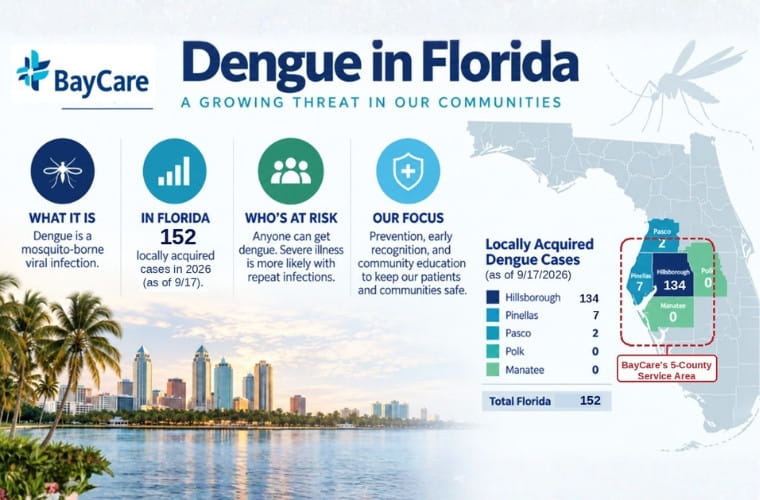
As dengue cases continue to be reported in Florida, with a state of emergency declared in Pasco County and mosquito-borne illness advisories issued in other counties, health experts are encouraging residents to take simple precautions to avoid mosquito bites and reduce their risk of illness. Fortunately, a few everyday habits can make a big difference. Understanding what dengue is and how it spreads can help you take steps to protect yourself and your family.
What is dengue fever?
Dengue fever is a mosquito-borne illness caused by the dengue virus and is most common in tropical and subtropical regions. It spreads through the bite of an infected Aedes mosquito, which is most active during daylight hours but can bite at any time of day.
Many people who become infected experience mild symptoms or no symptoms at all. When symptoms do occur, they may include fever, headache, body aches, nausea and rash, typically developing three to 14 days after infection.
“Dengue is something people should be aware of, but not fearful of,” said Kelly Gralnick, BayCare’s director of infection control. “The most important message is that prevention works. A few simple habits can significantly reduce your risk of mosquito bites and help protect you and your family.”
Unlike illnesses that spread from person to person, dengue is transmitted through mosquitoes. That means prevention efforts focus on avoiding bites and reducing mosquito breeding areas around homes and neighborhoods.
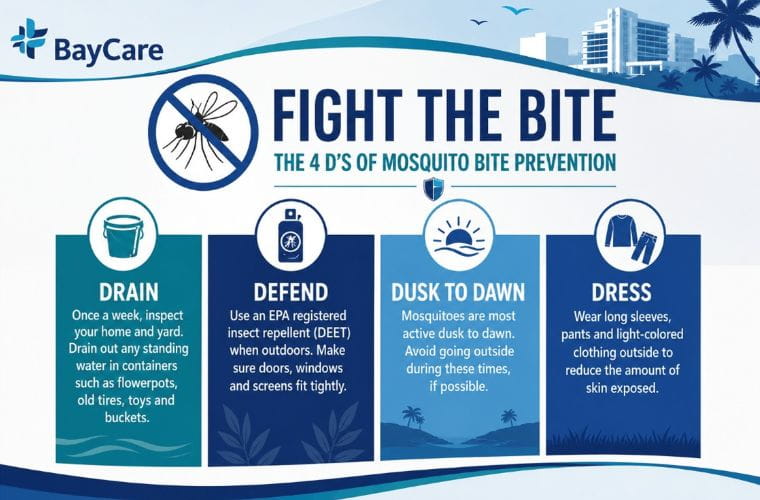
One of the easiest ways to remember dengue prevention strategies is to follow the 4 Ds:
Drain
Mosquitoes need standing water to reproduce. By routinely checking your yard and draining water from outdoor containers, you can help reduce the number of mosquitoes around your property.
Defend
Use an insect repellent that contains a CDC-recommended active ingredient like DEET, Picaridin, IR3535 or oil of lemon eucalyptus.
Be sure to follow the product label instructions, particularly when applying repellents to children. Repellents are a safe and effective way to help prevent mosquito bites when used as directed.
“Many people underestimate how effective insect repellent can be,” said Gralnick. “Using a recommended repellent consistently is one of the simplest and most powerful tools we have for preventing mosquito-borne illnesses.”
Dusk to Dawn
Mosquitoes tend to be more active around sunrise and sunset. If you're spending time outdoors during these hours, take extra precautions to protect yourself from bites.
Dress for Protection
Clothing can play an important role in bite prevention. Opt for long sleeves and pants when possible, especially during times when mosquitoes are more active, and choose light-colored fabrics for added visibility.
Additional Ways to Reduce Risk
In addition to following the 4 Ds, consider a few other mosquito-smart habits:
- Keep windows and door screens in good repair.
- Use air conditioning when possible.
- Avoid lingering near standing water.
- Consider mosquito control treatments if recommended in your area.
- Take extra precautions when traveling to locations where dengue is more common.
These small actions can make a meaningful difference in reducing mosquito exposure.
“Prevention starts at home,” added Gralnick. “Something as simple as emptying standing water after a rainstorm can help reduce mosquito breeding and protect not only your household but also your neighbors.”
When to Seek Medical Care
While most dengue infections are mild, it is important to know when to seek medical attention. Contact a health care provider if you develop symptoms like fever, severe headache, significant body aches, rash or nausea, particularly if you have recently traveled or spent time in areas with increased mosquito activity.
Early evaluation can help ensure you receive appropriate care and guidance. Health experts emphasize that awareness, rather than worry, is the best approach.
“We want people to enjoy being outdoors and staying active,” said Gralnick. “You don’t need to be afraid of mosquitoes, but understanding how to protect yourself through simple, everyday prevention measures can help reduce your risk.”
The best defense against dengue is preventing mosquito bites before they happen. By remembering the 4 Ds, staying aware of your surroundings and taking basic preventive measures, you can continue enjoying outdoor activities while helping keep yourself and your family safe.
For additional information about dengue fever, including symptoms, transmission and travel-related considerations, visit the CDC's dengue information page.
Concerned about symptoms? Connect with a BayCare provider for expert guidance and care: Find A Doctor