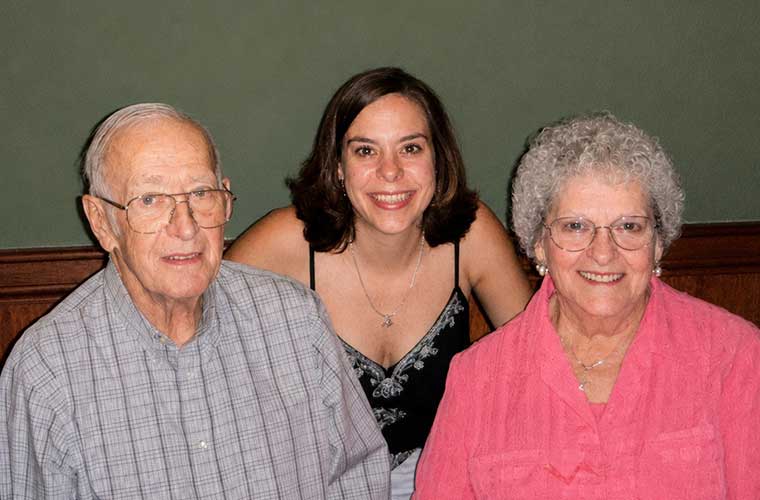
When Bonnie Skifstad was diagnosed with breast cancer 16 years ago, she largely relied on herself as she navigated treatment and recovery. So, when the cancer returned in 2024, she initially planned to take the same approach. “I had decided not to tell anyone,” Skifstad said. “I wasn’t going to ask anyone for help.”
Fortunately, Skifstad chose a different path. At BayCare’s St. Joseph’s Hospital in Tampa, her physician, care team and Cancer Patient Support Services (CaPSS) helped guide her through treatment and recovery.
Following her bilateral mastectomy and recovery, Skifstad found support and guidance from Jessica Kilgore, a licensed mental health counselor with CaPSS. Through their sessions, she learned the importance of asking for help and communicating what support she needed from those around her.
As Breast Cancer Awareness Month begins, Kilgore and BayCare offer these six tips to support those who are facing a breast cancer journey.
1. Don’t worry about finding the “right” words. Focus on being present.
People often become so afraid of saying the wrong things that they either try too hard to make things better or avoid the person altogether, Kilgore said. Immediately jumping to “everything is going to be okay” is not as comforting as you think it will be.
2. Ask what support looks like for them rather than assuming.
Support should be driven by what the person needs, not what the supporter believes they should need. “Maybe support is as easy as asking if they want to discuss cancer or if they would rather talk about anything else,” Kilgore said.
3. Make specific offers of help.
“Let me know if you need anything” sounds supportive, but it requires the person with cancer to do the work of figuring out what they need at that specific moment. Maybe try saying, “I’m going to the coffee shop. What’s your favorite order?”
4. Make room for difficult emotions without requiring positivity.
Supporting someone does not mean keeping them positive, Kilgore said. “Cancer can bring fear, anger, sadness, grief, uncertainty, relief, gratitude and hope,” she said. “Those experiences can coexist. “And” is a powerful word. All of these feelings can work together.”
5. Remember the person beyond the cancer diagnosis.
Cancer can become so consuming that the diagnosis starts occupying every interaction. People don’t want to be defined by their illness. Their personhood comes first.
6. Keep showing up after treatment ends.
The medical timeline and the emotional timeline of cancer are not necessarily the same. The ringing of the bell may spell the end of treatment, but individuals still need to feel the support of those around them.
Kilgore's passion for supporting cancer patients began nearly 20 years ago when her grandfather was diagnosed with cancer. Inspired to help others navigate the emotional challenges of a cancer diagnosis, she left a career in finance to pursue counseling. "I really took the bull by the horns and said be the change you wish to see in the world," she said. "I went and got a master's degree in counseling and human development. And I've been doing this for 17 years."
BayCare's Cancer Patient Support Services are available at no cost to patients and provided approximately 3,500 counseling visits to patients in the BayCare Cancer Institute in 2025. “Patients need a safe space where they can walk around in all the emotions that come with a cancer diagnosis,” Kilgore said. “That’s what we offer here.”
Skifstad said she plans to continue meeting with Kilgore and won’t hesitate to lean on friends and family for support. “I would advise anyone facing this diagnosis to go find a counselor and communicate with those around you,” she said. “Know that you don’t have to do it alone. Lean in and let people love and help you.”
Learn more: BayCare’s Cancer Patient Support Services