At BayCare, the commitment to helping patients achieve long-term health goes beyond traditional medical care. Through innovative programs like the intensive cardiac rehabilitation (ICR) at Mease Countryside Hospital in Safety Harbor, BayCare is addressing the complex nature of cardiovascular disease and empowering patients to take control of their health.
Like traditional cardiac rehab, ICR is designed for patients who have had a major cardiac event — like valve repair or replacement, heart transplant, heart attack, bypass surgery, stenting, angioplasty, chronic heart failure or stable angina — and can be referred for ICR by their physician.
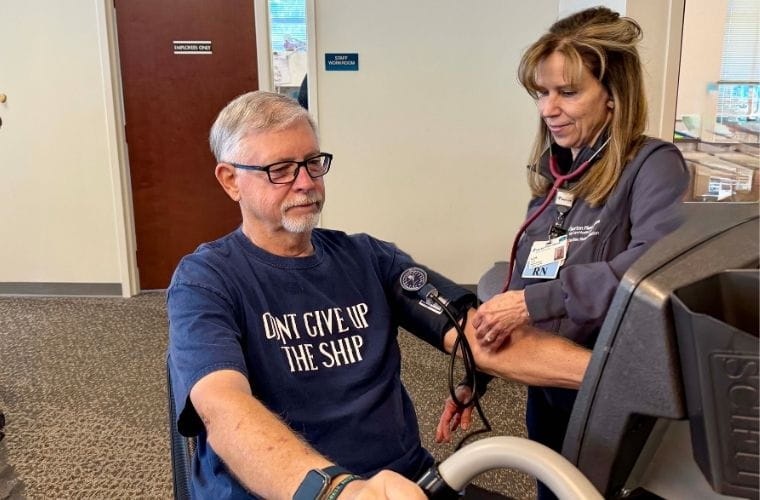
The therapy consists of two-hour sessions three times a week, the first hour providing personalized health screenings, fitness assessments, exercise, and medication reviews. All exercise is closely monitored with electrocardiograms (EKGs) and blood pressure checks before, during and after activity.
The second hour is what sets ICR apart. It includes interactive workshops and cooking demonstrations, teaching patients how to prepare heart-healthy meals and make informed choices. Patients also receive practical tools like weekly meal planners, grocery lists and recipes to help sustain their progress at home.
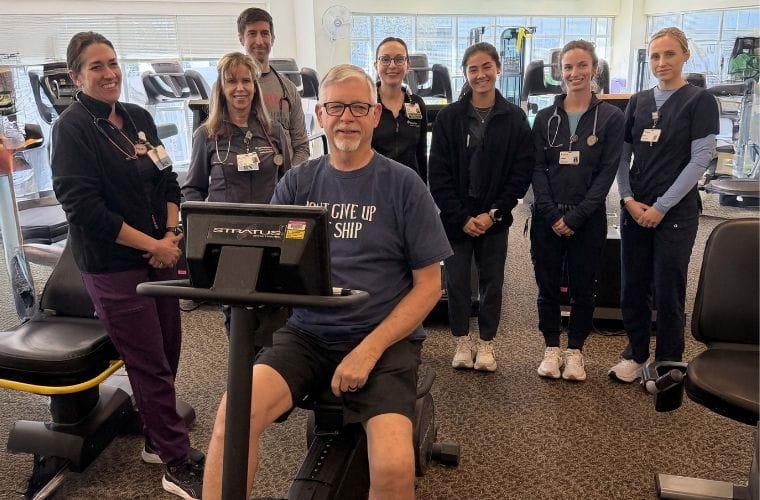
“It’s a program that goes beyond just exercise,” said Lori Meyer, a clinical nurse II for the ICR program. “The level of patient oversight not only ensures safety but also empowers patients to understand their bodies and progress, maximizing their chances for recovery and sustained health.”
Randy Maxson, who had valve replacement surgery, is one of the many patients who has seen life-changing results from the program.
A Coast Guard veteran and Clearwater resident, Maxson had been seeing BayCare Medical Group cardiologist and electrophysiologist Jonathan Hobson, MD since 2010 for AFib, an irregular heartbeat. He had several procedures to normalize his heart rhythm, but an echocardiogram early in his diagnosis indicated an issue unrelated to AFib: a faulty heart valve. Dr. Hobson monitored the valve annually, preparing Maxson that it would eventually need replacement.
In January 2025, an echocardiogram showed that the valve only worked 20 to 30%. Dr. Hobson referred Maxson to BayCare Medical Group cardiothoracic surgeon Michael Kayatta, MD. Due to the severity of the valvular disease, Dr. Kayatta recommended open heart surgery for the replacement.
“I had a quick timeline to get this done,” said Maxson. “I had a trip planned to visit Glacier National Park, Grand Teton and Yellowstone in July. The surgery was the first week in April, which gave me eight weeks to recover.”
After surgery and four days in the hospital, Maxson had two weeks of home health care before starting ICR.
“I changed my diet dramatically, recognizing the importance of portion control and decreasing fat and salt,” Maxson said. “I left the sessions with ideas and recipes.”
Maxson did so well that Dr. Kayatta gave him the okay to go on his trip to the national parks. After the trip, Maxson returned to his prescribed ICR program, which he completed in September.
The tailored exercise routines, nutrition education and ongoing support helped Maxson not only regain his strength but also lose 53 pounds, becoming healthier than he had been in decades. Since graduating from ICR, Maxson joined a gym and continues to work out three days a week.
“This program made it possible for me to fit into my Coast Guard uniform again,” Maxson said proudly. “It was so special when I wore it to the memorial service for my father, a World War II veteran whose service included full military honors from the U.S. Air Force Honor Guard.”
BayCare Morton Plant Hospital in Clearwater will also offer ICR soon. This expansion will increase access to advanced cardiac rehabilitation for patients across Pinellas County.
For more information on BayCare’s comprehensive care for heart disease:
Heart and Vascular Institute