Why Choose Us

When your child has a medical emergency, you want to know they'll be cared for by experts who understand their unique needs. Specialists in our dedicated pediatric emergency rooms — ERs made just for kids — offer diagnosis and treatment in a supportive, child-friendly environment. While every BayCare hospital ER can treat children, our designated pediatric emergency departments offer:

  • Specialized ER teams that include physicians who are trained and board certified in both pediatrics and emergency medicine
  • Diagnostic technology, equipment and treatments tailored to infants and children
  • Child-centered environment and Child Life Specialists to support children and families

If your child is experiencing a medical emergency, go to your nearest emergency room or call 911 immediately. 

All BayCare hospitals are equipped to provide emergency care to children of all ages.


Our Pediatric Emergency Center Locations

Our integrated BayCare network connects your child to the expert care that's needed in case of an emergency, throughout West Central Florida. Our doctors can consult from location to location, and if your child needs more specialized care, we have a dedicated pediatric transport team that can bring your child to St. Joseph’s Children’s Hospital from any location necessary, even if they're outside of the BayCare network.

When your child needs emergency care, we're ready. Some pediatric emergency services are available at BayCare Hospital Wesley Chapel and BayCare Winter Haven Hospital, such as child-specific treatment and waiting rooms. In addition, we have three designated pediatric emergency centers that feature expert teams and a full range of specialty care, including highly skilled pediatric surgeons.

St. Joseph's Children's Hospital – Steinbrenner Emergency/Trauma Center

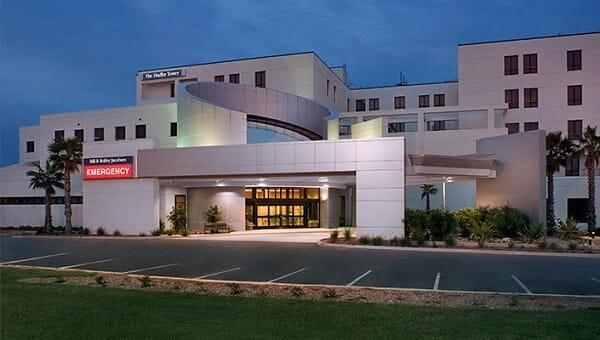
BayCare Kids emergency care is anchored by St. Joseph’s Children’s Hospital – Steinbrenner Emergency/Trauma Center, a state-certified level II pediatric trauma center. This certification means we have the expertise and resources to treat any type of illness or injury in babies and children.
SJCH exterior view

Our pediatric emergency centers also include:


Services Offered

Pediatric Emergency Specialists

BayCare’s pediatric emergency specialists are ready to help and heal from the moment you and your child come through the door. Our pediatric ERs are staffed 24/7 with specialized pediatric teams, including pediatric emergency physicians. These doctors have years of additional training and experience in treating sick and injured children in the ER.

We understand how health emergencies can seem different in children compared to adults. Our extensive experience, along with advanced diagnostic technologies, means we can quickly assess what’s going on with your child and treat them without delay.


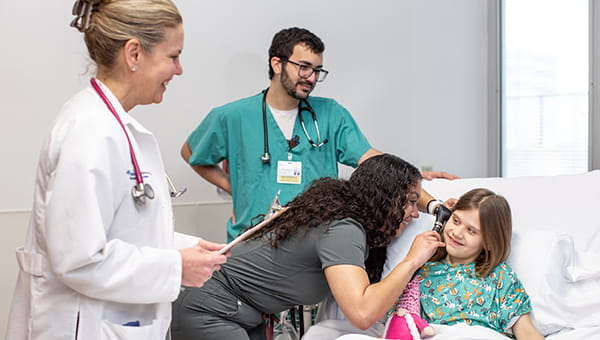
A faculty member watches as a resident looks inside the ear of a pediatric patient.
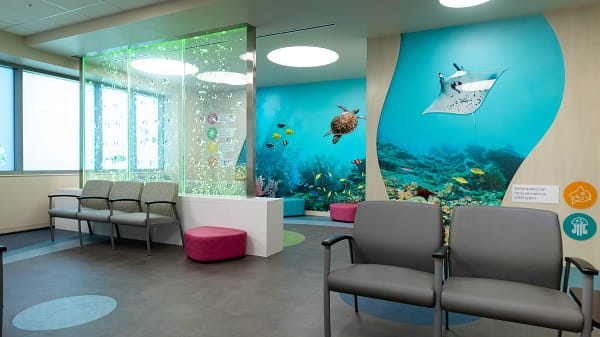
ER waiting room photo

Child-Appropriate Treatments and Settings

From cheerful décor to our child-centered care approach, our pediatric ERs are designed to make children comfortable and ease their anxiety. Here's what you can expect:

  • Pediatric emergency-trained providers who communicate with children in comforting, age-appropriate ways
  • Privacy and comfort in all patient rooms
  • Child Life Specialists
  • In-room entertainment

Child Life Specialists

Our pediatric emergency care is supported by dedicated Child Life Specialists to help your child and family navigate the hospital experience. They understand how stressful it can be for children to be surrounded by unfamiliar sights and sounds, machines and procedures. Child Life Specialists work with your child to explain diagnoses and procedures and provide comfort and distraction during tests and treatments.

In addition, the Child Life team can help you and your other children cope with feelings about having a child or sibling in the emergency room.

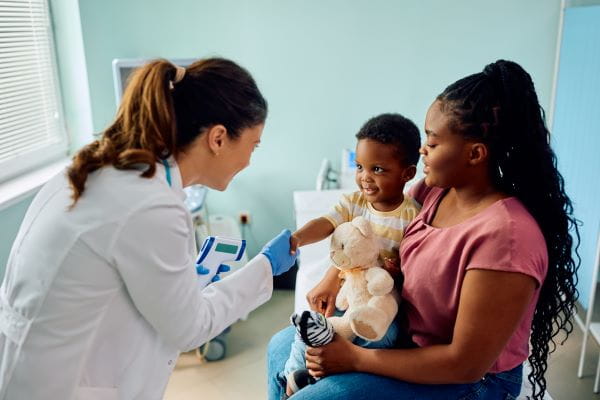
A doctor shaking hands with a child patient, while the child's mother holds him.

Additional Services

Skilled Neonatal and Pediatric Transport

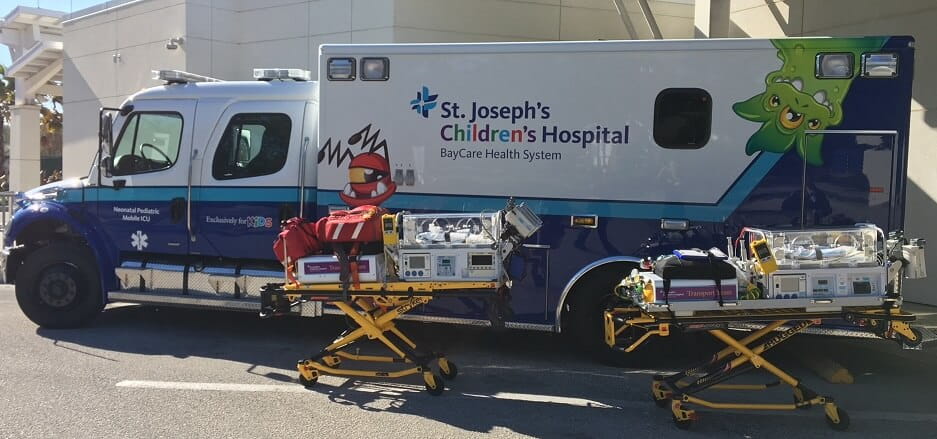
If your child needs to get to St. Joseph's Children's Hospital for specialized care, you're in great hands. Our neonatal and pediatric transport team is available 24/7 to transport babies and children by ambulance, helicopter or jet. Our specialized team includes a nurse, respiratory therapist and paramedic – all highly skilled in neonatal and pediatric medicine. They provide the critical care your child needs during transport. And our family-centered care approach allows a parent or designee to ride along.

Cooling Treatment for Hypoxic Ischemic Encephalopathy (HIE)

HIE is a serious, life-threatening condition in newborns that prevents the brain from receiving oxygen. A fast response is essential. Our team at St. Joseph’s Children's Hospital is ready with therapeutic hypothermia (cooling). This treatment improves a baby's chance of surviving and doing so without lasting neurodevelopmental disability. We offer therapeutic hypothermia during neonatal and pediatric transport and in our level IV neonatal intensive care unit (NICU).

Awards and Recognitions

BayCare has earned 17 Press Ganey Human Experience Awards® for 2025, placing our health system among the top 5 percent of providers nationwide and reaffirming our commitment to high-quality, compassionate care. 


Our Providers

A smiling doctor listening to the heart of a toddler patient.
Illnesses and injuries can affect children differently than adults. You can trust BayCare’s emergency specialists to understand your child's unique medical needs. They have years of additional specialty training in pediatric emergency medicine, including pediatric critical care. This high level of expertise means we can diagnose and treat your child quickly and handle all types of complex issues. Our pediatric emergency team members are specially trained and dedicated to your child’s well-being, from doctors and nurses to technologists and therapists.

Frequently Asked Questions

  • When should I take my child to a pediatric ER?

    A hospital emergency room is appropriate for any life-threatening illness or injury, and pediatric emergency rooms are uniquely suited for children. If you feel your child needs emergency care, call 911 or go to your nearest BayCare ER. 

    The ER is the place to take your child for a serious or life-threatening illness or injury. Here are some examples:

    • Bleeding (severe)
    • Broken bones
    • Choking
    • Dehydration
    • Drowning
    • Fainting, dizziness or weakness
    • Fever over 104 degrees that doesn't respond to medication
    • Head injury
    • Heat stroke
    • Poisoning or medicine overdose
    • Persistent vomiting or diarrhea
    • Seizures if your child has never had one before
    • Severe injury
    • Shortness of breath or difficulty breathing
    • Sudden or severe pain, especially in the chest
    • Unusual behavior or confusion


  • How can I be ready if my child needs care?

    We recommend planning ahead for health emergencies. Know where the closest emergency room and pediatric emergency room are located. And it's a good idea to post the address and phone number of our pediatric emergency centers in a central place in your home and in your phone's contact list.

  • When should I take my child to urgent care instead of the ER?
    An urgent care center might be the best place to be seen for a minor illness or injury for children age 6 months and older. Urgent care centers typically provide treatments at a lower cost than ERs. Find out when to go a BayCare Urgent Care instead of the ER.
  • How can I prepare my child to go to the emergency room?

    Going to the ER can be stressful for your child and your family. Here’s what helps:

    • First, reassure your child that the ER is a safe place and the medical team is going to help them feel better.
    • Let your child know you’ll be with them the entire time.
    • Bring a couple of toys, books, electronic games with chargers or a comforting blanket to pass the time while you wait.
    • Let siblings help. Older children might be able to babysit younger ones at home or help contact family or neighbors.
  • What should I bring?

    Be sure to bring with you:

    • A list of medications your child takes, any allergies they have or previous procedures they've had
    • Your insurance card and pediatrician contact information

    If there’s time, pack:

    • A change of clothes for you and your child in case your child is admitted to the hospital
    • Snacks and drinks, although the medical team will let you know if it’s OK for your child to eat or drink